
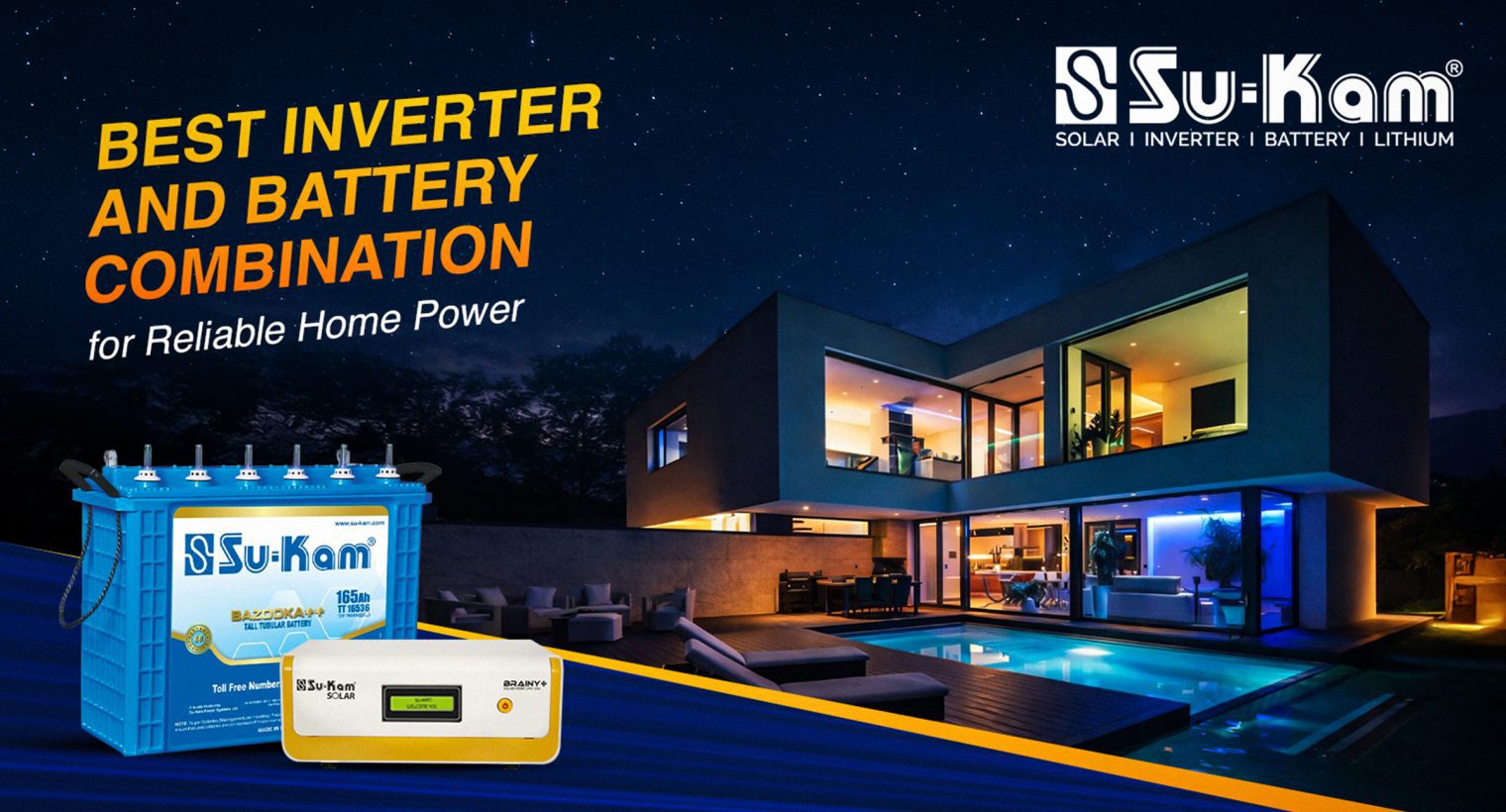
Power outages no longer just mean darkness. They interrupt work calls, online classes, home security systems, and daily comfort. With increasing electricity demand and unpredictable outages, investing in the best inverter and battery combination for home has become essential.
A properly selected inverter setup not only provides uninterrupted power but also protects your appliances, improves energy efficiency, and offers peace of mind. Choosing the best inverter with battery for home ensures you stay productive and comfortable, even during long power cuts.
Working Together of Inverter and Battery:
The inverters convert the stored direct current (DC) power from batteries to alternating current (AC) power that can operate household appliances. Batteries store the electrical energy; inverters regulate the delivery of electric current and provide overcurrent protection and expertise. Basically, the inverter manages power conversion and flow, while the battery determines how long your home stays powered during an outage. Many buyers treat the inverter and battery as two separate purchases, focusing on price or brand rather than compatibility. In reality, they function as a single system. The real performance will occur when properly choosing the best inverter and battery combination for home. A poorly matched battery with the best inverter for home will struggle if the battery capacity or compatibility is wrong.
Consider the following when selecting a best inverter for home:
- Power Load Requirements- Find out how many watts your appliances requirein order to determine the VA rating of your inverter.
- Backup Time-Determine how many hours of backup power in terms of battery capability will you need. The longer the backup period, the greater the capacity of the battery(s) required.
- Battery Type and Capacity- Ensure that the inverter supports the type of battery you choose, as well as the battery’s rated capacity.
- Efficiency/Safety- Choose an inverter that has overload, short circuit, and voltage fluctuation protection systems in place.
Why Pure Sine Wave Inverters Are Preferred for Homes
Modern homes are filled with sensitive electronic devices that require clean and stable power. Televisions, laptops, routers, and smart appliances can be damaged by inconsistent voltage or poor quality output. Pure sine wave inverters provide power that closely resembles grid electricity, ensuring smooth appliance operation and longer equipment life. For this reason, they are widely considered the best inverter for home use, especially in households that rely on modern electronics.
How to Calculate the Right Inverter Capacity for Your Home
Formula:
Total Load (Watts) ÷ 0.8 = Required Inverter VA
Example:
If your total load is 800W:
800 ÷ 0.8 = 1000 VA inverter
Always choose slightly higher capacity to avoid overloading.
Types of Battery for Home
1. Tubular Batteries
- They have a long service life.
- They are designed for frequent power outages.
- They require little maintenance.
2. Flat Plate Batteries
- Flat plate batteries are an inexpensive type of battery for homeowners.
- They are best for short-term power cuts.
3. Lithium-Ion Batteries
- Lithium-ion batteries are compact and lightweight.
- They have fast charging times.
- They require no maintenance.
For long-term value, tubular and lithium-ion options are often the best battery for home choices.
Best Inverter with Battery for Home: Match Your Power Needs to Your Lifestyles
Households use electricity in distinct ways. Smaller homes will typically require just enough backup to supply a couple of lights and fans but more substantial properties may require multiple uninterrupted backup power sources to keep their computers or workstations powered, their refrigerators full and their internet access online. The inverter that is right for you will match your normal lifestyle when there is a power interruption, allowing you to continue using your critical items without interruption. If your inverter can work quietly and automatically take over during a blackout without you even noticing it, you have selected the perfect combination of inverter and battery.
Best inverter with battery for home are available in different sizes, and they can serve different households based on how many rooms, types of appliances, and how much energy each appliance uses.
- A small home (1 BHK or a 2 BHK/Apartments) will require an inverter (700 VA to 900 VA) and a 100 Ah battery.
- A medium-sized home (2-3 BHK) would require an inverter (1100 to 1500 VA) and a 150 Ah battery.
- A larger home (a villa or large flat) would require larger systems (such as an inverter rated for over 2000 VA) and may use multiple batteries for backup power.
Common Mistakes to Avoid While Buying an Inverter
- Choosing low capacity to save cost
- Ignoring future power needs
- Mixing incompatible inverter and battery
- Overlooking after-sales service
Avoiding these mistakes helps you invest in the best inverter and battery combination for home.
Maintenance Tips to Increase Battery Life
- Keep terminals clean
- Check electrolyte levels regularly
- Avoid deep discharge
- Ensure proper ventilation
- Use energy-efficient appliances
FAQ’S
- What is the best inverter and battery combination for home use?
The best combination depends on your power usage, outage frequency, and backup duration. A pure sine wave inverter paired with a tubular or lithium-ion battery works well for most homes. - How do I choose the best inverter with battery for home?
Start by understanding your daily power needs during outages. Then choose an inverter and battery that can comfortably support that load without strain. - Is a pure sine wave inverter necessary for home use?
Yes. Pure sine wave inverters provide smooth, stable power and are safest for modern appliances, making them the best inverter for home use. - How long does an inverter battery last at home?
With proper usage and maintenance, most inverter batteries last between 3 to 5 years. - Can one inverter run all home appliances?
Only if the inverter capacity and battery setup are designed to handle your total load. Proper planning is essential.