
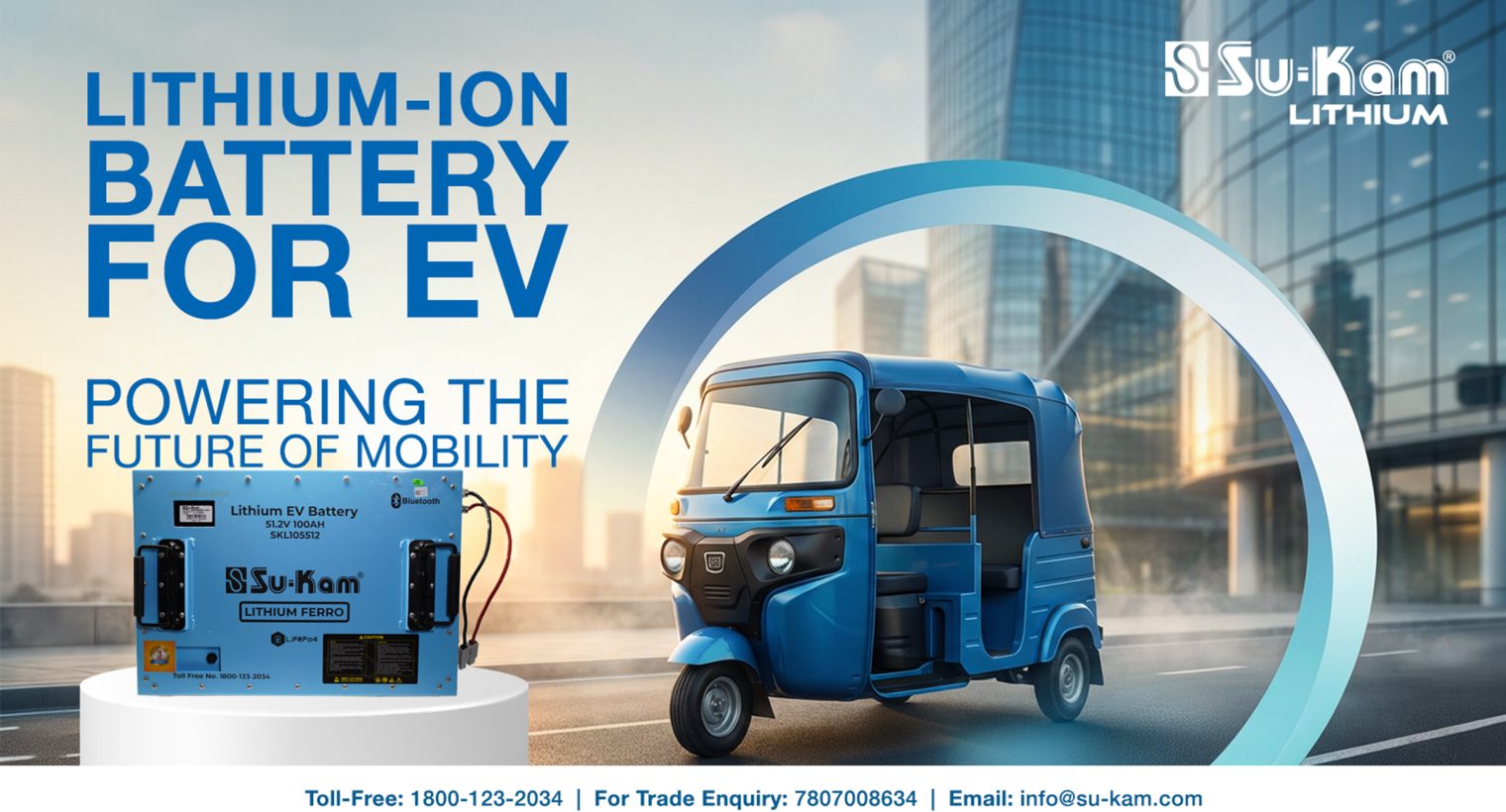
Innovation has played an integral part in creating a better tomorrow for all through Su-Kam. The increasing worldwide demand for cleaner, more efficient means of transportation has rendered the Lithium Ion Battery the next big innovation in the energy marketplace by providing a superior alternative to traditional lead-acid battery technologies.
Electric vehicles have also moved beyond being just an option to become the preferred mode of transportation within today’s market. The growth of EVs is the direct result of advances in battery technology providing higher levels of efficiency, reliability and performance. The evolution of the lithium-ion battery is enabling this shift, redefining how energy is stored and utilised across modern mobility systems.
Understanding Lithium-Ion Battery Technology
Lithium-ion batteries operate through the movement of lithium ions within and among their electrodes to provide exceptional performance levels. By enabling efficient energy storage and release via electrode chemical reactions, lithium-ion batteries have a much greater energy density than conventional battery technologies. Therefore, lithium-ion batteries can be used in numerous applications that require higher energy densities than other battery types, such as electric vehicles.
In EV applications, a typical lithium battery pack consists of many individual cells combined together to achieve an appropriate battery combination for the required power output. In addition to being extremely safe and long-lasting, lithium Battery Packs also demonstrate reliable performance and therefore serve as essential elements of contemporary electric mobility systems.
How Lithium Ion Battery for EV is Transforming Mobility
The lithium-ion battery has the ability to store greater amounts of energy within a very small footprint, allowing for a greater range for all EVs and making them more feasible for the average consumer to use every day.
Another major benefit associated with EVs utilizing lithium-ion batteries is the speed of the charging process. With the development of charging infrastructure, EVs powered by lithium-ion battery are becoming a lot easier to use, resulting in reduced charge time and therefore improved user experience.
From an environmental perspective lithium-ion battery for EV used in EVs support zero-emission transportation and align with worldwide efforts to decrease carbon emissions and support cleaner air.
Beyond EVs: A Wider Energy Ecosystem
While the lithium-ion battery for EV is transforming transportation, its impact extends far beyond mobility. The same technology can also provide electricity storage for solar energy systems, back up electricity supply for homes, as well as other commercial uses.
Because of this versatility, lithium-ion batteries are at the very core of today’s energy solutions. In conjunction with sophisticated lithium battery pack designs, they support greater efficiency in energy storage and improved methods for managing electrical current’s flow into the electrical grid; thus, ensuring a greener, better-integrated future.
The Importance of Lithium Battery Pack Design
The performance of an electric vehicle is heavily influenced by the efficiency of its lithium battery pack. At Su-Kam, we design battery solutions that will help achieve the best possible energy management and keeping with the best possible safety standards.
The design of an lithium battery pack is critical to increasing the performance and range of a vehicle, while also ensuring long-term vehicle reliability and contributing to a vehicle’s thermal stability, allowing for safe operation and efficient power usage.
As battery technology advances and continues to develop, there are many innovative designs in the way a lithium battery pack is designed to allow for ease of access, better efficiency and greater reliability for an electric vehicle.
Conclusion
The future of energy-efficient transportation is growing rapidly because of the development of battery technology for Electric Vehicles. As Electric Vehicle and advanced energy storage technology is becoming more mainstream, the demand for lithium-ion battery for EV continues to grow.
Su-Kam understands that the combined power of expertise and innovation will lead to the next generation of electric vehicle batteries.
FAQs
What is a lithium-ion battery for EV?
A lithium-ion battery for EV is a rechargeable battery designed to efficiently power electric vehicles with high energy density and long lifespan.
What is a lithium battery pack?
A lithium battery pack is a system of multiple lithium-ion cells combined to deliver the required energy and performance for applications like electric vehicles.
Why are lithium-ion batteries preferred for EVs?
They offer higher efficiency, faster charging, and longer lifespan compared to traditional battery technologies.
How long does a lithium-ion battery last?
A lithium-ion battery typically lasts between 5 to 10 years depending on usage and conditions.
Are lithium-ion batteries safe?
Yes, modern lithium-ion batteries are designed with advanced safety features, especially when integrated into well-engineered battery packs.